$440,000 in new grants awarded
At its July 2026 Board Meeting, the Natural Resources Conservation Trust awarded almost $440,000 in new grants across four projects.
The new grants were awarded to three Bushbank Private land stream projects and also to Co-Exist for continuing to empower young people in conservation leadership over the next three years.
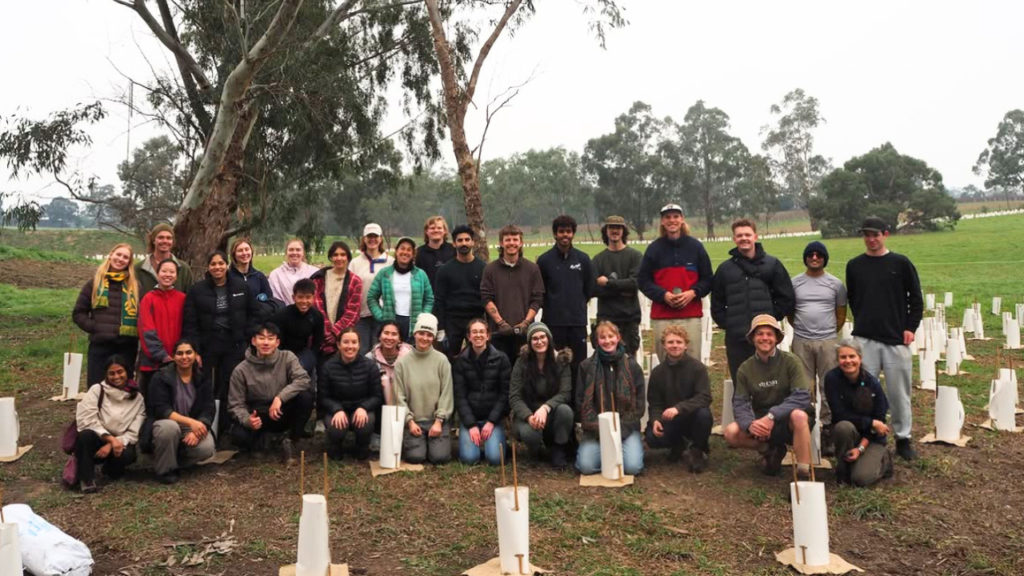
The Co-Exist grant of $240,000, payable over three years, will result in the continuation of the Trust’s support for this innovative youth led volunteer movement that has a vision of “Young people connected to nature and leading it’s protection and restoration”.
The Trust initially supported Co-Exist for 12 months to replicate their successful model from Queensland and NSW into Victoria and the southern States. The momentum created and successful early demand and impact of Co-Exist’s work has led to the Trust supporting their programs over the next three years. For more details on their work and how you can get involved, please check out their website.
Co-Exist CEO Kurt Jones is excited by the Trust’s continued support and explains the principles behind Co-Exist’s success:
“Everything Co-Exist does flows from three interconnected principles. Young people first Explore natural places alongside their peers – discovering local ecosystems, learning about biodiversity and experiencing the environment firsthand. Through that shared experience, they Connect – building genuine friendships and a sense of belonging to something larger than themselves. That connection becomes the motivation to Protect – to take real, sustained conservation action because they now love the places they are caring for. Co-Exist is a community first and a conservation force second. Young people come for the social experience and become environmentalists. That sequencing, community before cause, is what makes Co-Exist’s volunteer retention strong and its conservation commitment deep. Many of our most dedicated leaders joined because a friend invited them to a beach clean-up, they stayed because Co-Exist became their community.”
Tickets now on sale to Trust sponsored event
The Trust is proud to be sponsoring the 2026 Victorian Landcare Forum, which will be held at the Cardinia Cultural Centre in Pakenham from 31 August to 2 September.
The Victorian Landcare Forum facilitates the gathering of landcarers, professionals, experts and key stakeholders who are taking action to support rich landscapes, vibrant ecosystems and sustainable agricultural practices, all while bolstering the strength of local communities. Additionally, the Forum helps strengthen the landcare movement, through knowledge sharing and learning via formal sessions and informal networking opportunities.
This year, the conference portion of the Forum will be held over two days, with a mixture of plenary sessions and concurrent streams, which will allow you to choose the way you experience the Forum. Check out the program – with more details to be added in coming weeks.
Tickets are now on sale for this hallmark event – get yours today. Tickets are on sale until Monday, 17 August.
Mallee Looper researchers present findings
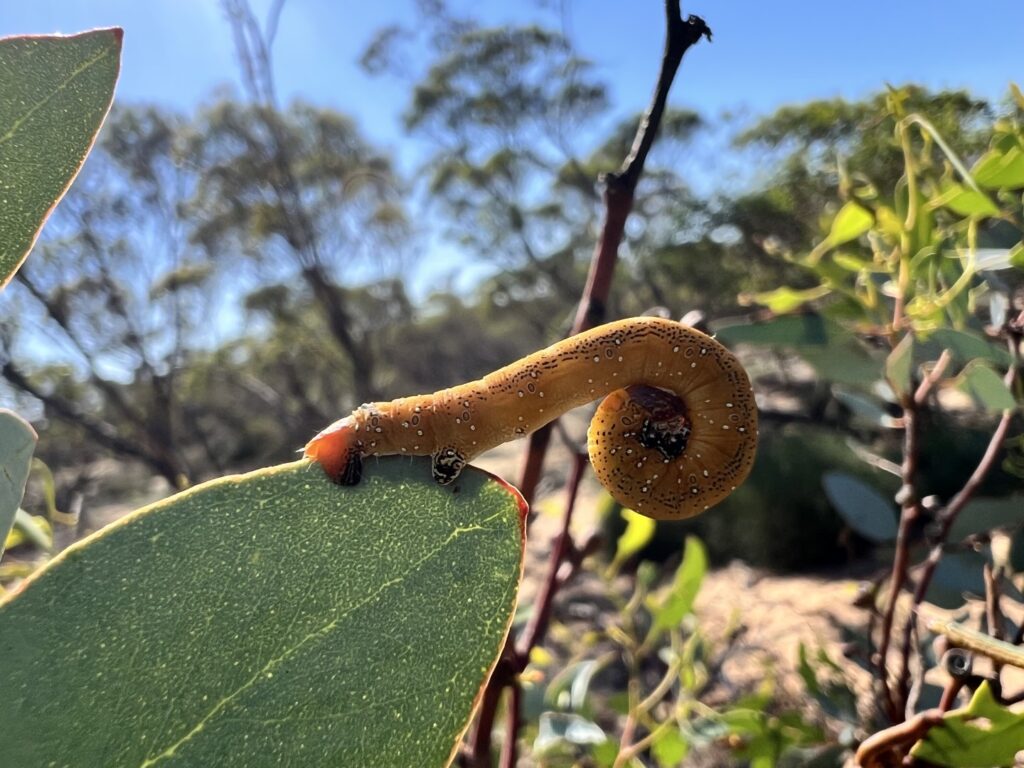
In 2025, the Natural Resources Conservation Trust awarded $49,200 to Wildlife Unlimited for their project “Strengthening connection and active hope – building understanding of the Mallee Looper caterpillar (Arhodia sp.)”.
Wildlife Unlimited recently presented a summary of the outcomes of research at two webinars held on 29 April, for around 120 registered participants from NRM agencies and the community across Victoria, South Australia and New South Wales.
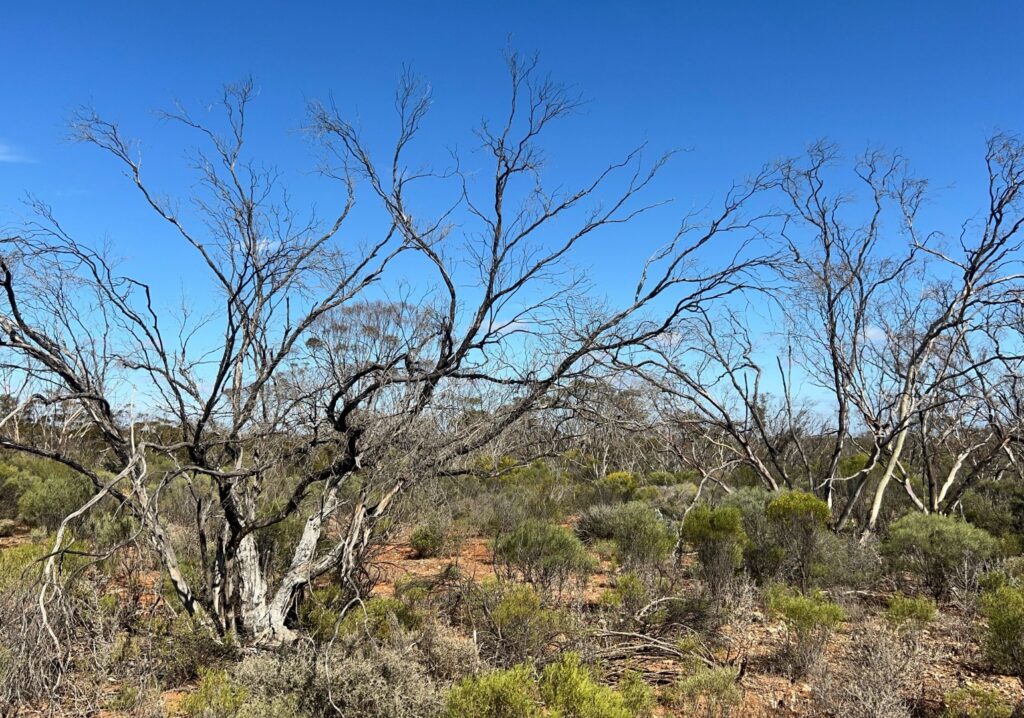
The project is investigating the outbreak of Mallee Looper caterpillars, a native species that has been defoliating thousands of hectares of Mallee Eucalypts since 2022. Led by Wildlife Unlimited in partnership with Mallee Conservation, the project has involved a tristate network of NRM practitioners, researchers and volunteers – known as the Looper Groupies – to fill key gaps in understanding the Looper’s life cycle, habitat preferences and outbreak drivers.
Citizen scientists have played a central role in the research, trapping moths at 11 monitoring locations across the Victorian Mallee and contributing to the iNaturalist project “Looking for Mallee Loopers”, which has now recorded 1,943 observations from 633 observers. Their fieldwork helped build understanding of the widespread distribution of the moth across the Victorian Mallee.
Findings presented included new information on the life history – quantifying egg laying by moths, documenting the caterpillar’s six life stages (instars) and recording the timing and abundance of moths, caterpillars and defoliation at study sites.
Want to know more? Watch the webinar recording or visit the Mallee Looper research blog.
WELA scholarship recipients
The Natural Resources Conservation Trust was proud to once again sponsor the Women’s Environmental Leadership Australia’s (WELA) National Leadership Program in 2026. Through this support, Maggie McDonald and Anna Chahuneau have been awarded scholarships to complete the Program – an achievement we’re proud to have helped make possible. For the winter newsletter, we invite you to learn more about the first of our scholarship recipients below.
Meet Anna
Anna Chahuneau is a Brisbane-based environmental filmmaker, photographer, and communications strategist who bridges science, storytelling, and community. Fluent in French, English, and Spanish, she has worked internationally with mission-driven organisations, directing documentary films, producing campaigns in collaboration with scientists and Indigenous communities, and creating content that turns complex environmental issues into compelling human stories.
With a background spanning biology and environmental science, Anna holds a Master’s in Environment, Culture & Society from the University of Edinburgh and is a firm believer in narrative as a tool for building connection and inspiring action.

She is the director of Pursuing the Monarchs and Seeds of Sovereignty, two documentaries that reflect her commitment to conservation storytelling on the ground.
Anna is honoured to receive this scholarship in forest conservation, a cause that sits at the heart of her work and her world.
Trust Board visit to Mt Rothwell
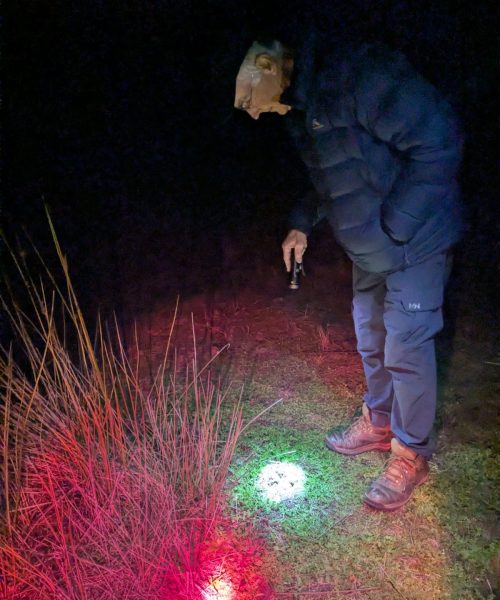
The Natural Resources Conservation Trust Board were invited to visit the inspirational Mt Rothwell in June, to meet with Odonata CEO Steph Swann and Chief Operating Officer Matt Singleton.
The visit provided the Trust Board with an opportunity to hear more about the work underway across Mt Rothwell and the broader Odonata Safe Haven sanctuary network, and discuss shared interests in threatened species recovery, landscape restoration and long-term conservation outcomes.
The visit concluded with a guided night walk through Mt Rothwell to observe nocturnal wildlife and discuss the role of predator-proof sanctuaries in supporting threatened species populations.
Two new Chairs!
Natural Resources Conservation League
The Natural Resources Conservation League Board recently held a lunch to celebrate the combined 20 years of voluntary service by outgoing Chair, Jon Hutchins, who served for 14 years, and Director Emily Johnstone who served for six years. Outgoing NRCL Executive Officer, Les McLean was also recognised for his service to the NRCL Board over the past five years. NRCL Life Members Ken King and Lynn Murrell were present in recognition of the exemplary services given by the departing trio.
Nicola Ward has been appointed as Chair of the NRCL. Nicola has over 20 years’ experience in local and state government and brings strong skills in public policy and strategy and implementation, particularly in natural resource management and land use change.
Nicola has been an NRCL Board member since 2020 and has recently served as Chair of NRCL’s Cranbourne West Sub Committee that oversees all matters associated with NRCL’s Cranbourne site. Congratulations Nicola!
Natural Resources Conservation Trust
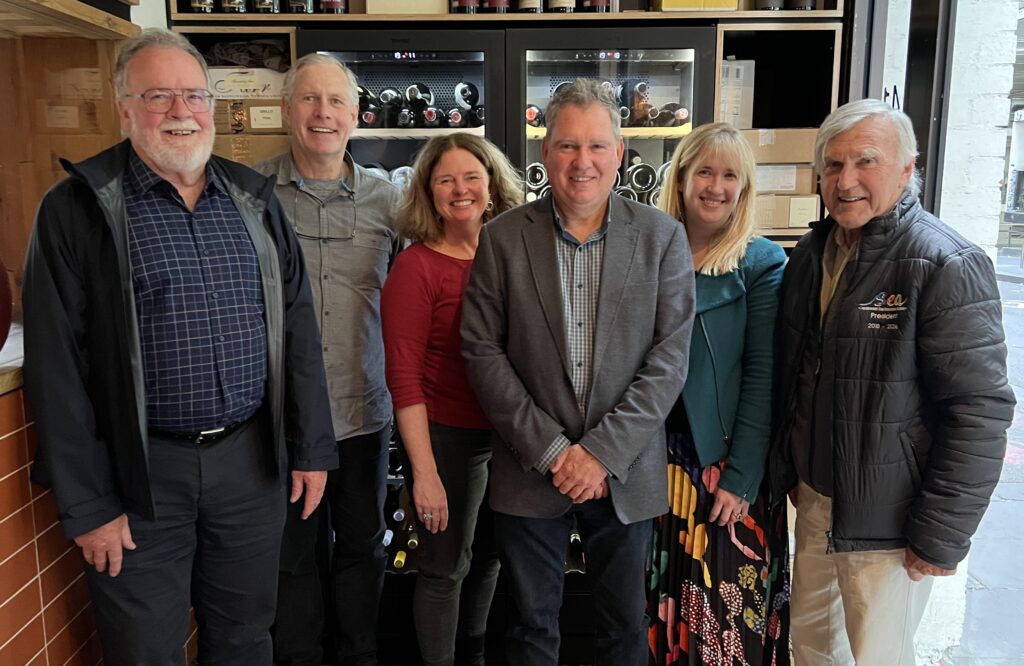
Julia Hunter has been appointed as the new Chair of the Natural Resources Conservation Trust. Julia’s experience includes leadership roles in tourism, retail and not-for-profit. She is driven by the powerful connections that can be built between an organisations social purpose and sustainable profits.
On behalf of the Trust Board, Julia would like to acknowledge outgoing Chair Jon Hutchins, who was the inaugural Trust Chair. Jon remains on the Board as Deputy Chair.

New NRCL directors
NRCL is pleased to welcome three new directors to its Board – Jennifer Wolcott, Simon Harders and Sarah Felsovary. Read more about each of them below.
Jennifer Wolcott has had a long career in the Victorian public sector with a focus on environmental and natural resource management and rural and regional development. Jennifer has led significant policy, legislation, regulatory reform and strategy programs holding executive positions with Environment Protection Victoria, Parks Victoria, Regional Development Victoria, Emergency Management Victoria and several departments.
Jennifer has been a member of the Victorian Coastal Council, Victorian Environment Assessment Council, and a board director of the Royal Botanic Gardens Victoria, Trust for Nature and the Institute of Public Administration Victoria. Jennifer is currently on the board of the North East Catchment Management Authority. Jennifer has a degree in forest science, is a graduate of the AICD and a fellow of IPAA Victoria.
Simon Harders is a lawyer and governance professional with more than 15 years’ experience across governance, risk, legal and compliance, and major construction and development projects. He is currently General Counsel of a major Melbourne construction company, where he advises directors and senior management on governance, risk management, regulatory compliance and project delivery matters.
Simon recently completed the Graduate Diploma of Applied Corporate Governance and Risk Management through the Governance Institute of Australia and has a strong interest in effective governance and sustainable development. He also has an engineering background, having commenced his career at Yarra Valley Water in sustainable growth planning and sustainable development roles.
He is excited to join the NRCL Board and contribute to the organisation’s important work supporting conservation and sustainable development initiatives across Victoria.
Sarah Felsovary started her career as a CPA, building finance and commercial skills across a range of industries spanning from multinational orgainsations to ‘for-purpose’ community associations. This has evolved into strategic management skills where she enjoys articulation and then translation of vision into delivery. Alongside this, Sarah has developed cross-functional skills managing risk and compliance, IT, marketing and HR, supporting the delivery of purpose. More recently, she gained a solid understanding of governance through a number of volunteer board positions, enabling her to utilise my skills and experience to give back to the community.
Sarah is passionate about conservation of the environment and ensuring sustainability now to preserve the best we have for future generations. She is proud to be able to support NRCL through this board position and is excited for the contribution this can make for the natural environment.
League appoints new Executive Officer
The Natural Resources Conservation League (NRCL) is pleased to introduce Jo-Ann (Jo) Riley as the new Executive Officer, supporting the NRCL Board.
With more than 25 years’ experience in senior leadership roles across the higher education, water, local government and not-for-profit sectors, Jo brings deep expertise in governance, strategic planning and corporate services.

She has led complex portfolios spanning governance, risk, procurement, contracts, people and culture, health and safety, infrastructure technology and information management.
Jo’s previous roles include Interim CEO at The Australian Clinical Trials Alliance (ACTA) and Director at Deakin University, where she led the corporate functions of the Infrastructure and Property Group and oversaw delivery of the University’s five-year $750 million Infrastructure and Property Strategy.
Jo is a graduate of Harvard University’s Authentic Leadership Program and the Australian Institute of Company Directors, and a Fellow of the Peter Cullen Trust. She has served on numerous boards, committees and senior advisory groups and is the former President and Director of the Tertiary Education and Facilities Management Association, representing more than 2,000 higher-education professionals across Australia and New Zealand.
Looking Back - A brief history of NRCL’s logos
NRCL is a not-for-profit conservation organisation that has long been regarded as one of the most durable, distinctive and influential public environmental conservation groups in the state. For over eighty years, NRCL and its predecessor organisation, The Save the Forests campaign, had a substantial membership that spanned both private individuals and institutions from across Victoria. Those members elected unpaid volunteers to direct the League’s operations through an Executive and specialist committee structure. During much of its past, NRCL also comprised a small but committed group of paid professionals including administrators, field and education officers, clerical and nursery staff. Over this time, a range of logos were utilised that represented meaningful messaging to the public of NRCL’s Purpose over past generations.
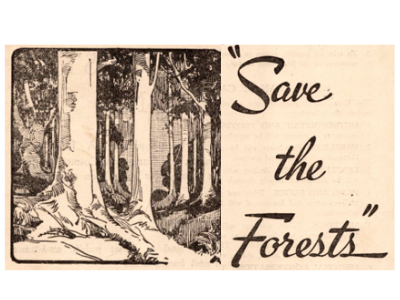
The original 1944 Save the Forests Campaign’s first promotional leaflet contained the inaugural image below, representing a past healthy forest environment, prior to the disastrous and deadly 1939 Black Friday bushfires in which “seventy-one lives were lost…Millions of acres of fine forest, of almost incalculable values, were destroyed or badly damaged” (Report of Royal Commission).
Following NRCL’s incorporation in December 1951, to continue the work of the original Save the Forests campaign, the new logo was used to emphasise the importance of trees in the Victorian landscape.
Throughout the 1960s, NRCL began to focus on broadening its education programs on the importance of trees, running a range of programs with schools, local government engineers, farmers and even ran Short Courses for Farmers Wives. This period also saw the beginnings of 50 years of publication of the quarterly Trees and Natural Resources magazine/journal (known in 1959-80 as Victoria’s Resources, and then Trees and Victoria’s Resources in 1980-85). A new logo was created depicting the state of Victoria and its natural resources.

During the 1970s, NRCL’s hugely successful Junior Tree Lovers League for school students was at its peak. Reflecting popular culture at the time, and to appeal more to highly engaged youth and schools’ programs, a wholesale change in logo styles and colours saw the following in use, depending on the circumstances.
After 40 years, the logo changed again for the penultimate time in the early 1980s, as NRCL encompassed a new approach to conservation, including in peri-urban areas to enhance biodiversity and reduce ecosystem fragmentation. NRCL also focussed on integrated natural resource management with tree planting as the central element in the trilogy of forests, soil and water. This logo was used for over 30 years as NRCL returned to a mission of leadership in conservation that accorded more strongly with the League’s proud heritage of grass-roots community empowerment in conservational land management.
In 2023, NRCL adopted its current logo. With the creation and operation of the new philanthropic Trust, it was time for a new brand for NRCL that better represented both entities. The logo is designed to be used interchangeably with the two entities of NRCL and the Trust which was a key consideration in the design brief. According to the designer, the logo is “clean and simple, this features hand drawn leaves from Victoria’s eucalypt forests and subtly conveys water, trees and soil”.
We hope you enjoyed exploring our logo history as a small but important part of our organisational story.